How I Finally Fixed My Balance (And Why It Changed Everything)
You don’t think about balance until you lose it. I stumbled over flat ground, wobbled on sidewalks, and felt unsteady getting out of chairs. It wasn’t aging—it was neglect. After digging into how balance really works and testing moves that actually help, I rebuilt my stability from the ground up. This isn’t just about not falling; it’s about moving with confidence. What I learned rewired my workouts, posture, and daily life. Here’s what science and real experience taught me.
The Hidden Crisis of Poor Balance
Balancing well is something most people take for granted—until it starts to slip. It’s not always dramatic. There’s no alarm bell when balance begins to decline. Instead, it happens quietly: a near stumble on level pavement, a hand instinctively reaching for the wall when standing up too quickly, or the uneasy feeling that your body isn’t quite where you think it is. These small moments are early signs of a growing problem that, left unaddressed, can lead to serious consequences. Poor balance isn’t just an inconvenience—it’s a health risk hiding in plain sight.
Balance affects far more than just staying upright. It plays a critical role in coordination, posture, and injury prevention. When balance is compromised, everyday movements become less efficient and more dangerous. Simple acts like climbing stairs, stepping off a curb, or even turning in bed can become risky. The body compensates in subtle ways—leaning slightly, shuffling feet, or tightening muscles unnecessarily—which over time can lead to joint strain, chronic discomfort, and reduced mobility. This silent deterioration often begins much earlier than people realize, sometimes in midlife or even before, long before falls occur.
The statistics on fall-related injuries are sobering. According to public health data, one in four adults aged 65 and older reports a fall each year, and falls are the leading cause of both fatal and non-fatal injuries in this age group. But the decline starts earlier. Research shows that balance abilities begin to diminish as early as age 40, with measurable changes in stability and reaction time. What’s more alarming is that many younger adults already show signs of poor balance due to sedentary lifestyles, lack of varied movement, and weakened sensory systems. This isn’t just an older adult issue—it’s a widespread, under-recognized public health concern.
What many don’t realize is that balance is not purely physical. It’s a neurological skill, deeply tied to the brain’s ability to process information from the body and environment. The brain constantly integrates signals from the inner ear, eyes, and muscles to maintain equilibrium. When any part of this system is underused or impaired, the whole network suffers. This mind-body connection means that improving balance isn’t just about stronger legs—it’s about sharper neural processing, better body awareness, and improved communication between brain and body. Neglecting this system is like ignoring a vital part of your health infrastructure.
What Balance Really Is (And Isn’t)
At its core, balance is the body’s ability to maintain control of posture and movement, whether standing still or in motion. But it’s not a single system—it’s a complex collaboration between three key components: the vestibular system in the inner ear, visual input from the eyes, and proprioception, which is the body’s sense of where it is in space. Each plays a distinct role. The vestibular system detects motion and head position, the eyes provide environmental cues, and proprioception—often called the ‘sixth sense’—relies on sensory receptors in muscles, tendons, and joints to relay real-time feedback about limb position and movement.
Think of balance like Wi-Fi for your body. When all three signals are strong and synchronized, everything runs smoothly. But if one connection drops—like relying too much on vision when standing with eyes closed, or if the inner ear is disrupted by illness—the entire system slows or fails. This is why standing on one leg with eyes closed is so much harder than doing it with eyes open. The brain loses one data stream and must work harder to compensate. Over time, if one system is consistently underused, the others can’t fully pick up the slack, leading to instability.
A common misconception is that balance only matters for older adults or athletes. In reality, everyone uses balance constantly, from walking across a room to reaching for a high shelf. It’s active in every movement, even when sitting or turning your head. Another myth is that good balance comes automatically with strength or fitness. But someone can have strong muscles and still struggle with balance if their sensory systems aren’t trained. In fact, modern lifestyles often weaken these systems. Hours of sitting reduce joint mobility and muscle responsiveness. Wearing flat, unsupportive shoes on even surfaces limits foot sensitivity. And constant screen focus narrows visual attention, reducing the brain’s ability to process spatial cues.
These habits create a perfect storm for balance decline. The feet, which are rich in sensory nerves, become less responsive when confined in shoes and rarely exposed to varied terrain. The inner ear, which thrives on movement and changes in head position, is underused in predictable, seated routines. And the brain, accustomed to static visual input, struggles when faced with dynamic environments. The result is a body that looks strong but functions inefficiently. The good news is that these systems can be retrained at any age. Balance is not fixed—it’s trainable, adaptable, and responsive to consistent, mindful practice.
Why Traditional Workouts Miss the Mark
Most fitness routines prioritize strength and cardiovascular endurance. People lift weights to build muscle, run or cycle for heart health, and stretch for flexibility. While these are important, they often overlook a crucial component: dynamic stability. Traditional gym workouts tend to focus on repetitive, predictable movements performed on stable surfaces—like bench presses, leg extensions, or treadmill walking. These exercises build isolated strength but do little to challenge the body’s ability to maintain balance in real-world conditions.
This gap becomes evident when fit individuals attempt simple balance tests. A person who can squat 200 pounds may still wobble when standing on one leg. Someone who runs marathons might struggle to walk a straight line on uneven ground. This disconnect highlights a key issue: looking strong doesn’t always mean moving well. Functional fitness—the ability to perform daily activities safely and efficiently—relies heavily on balance, coordination, and body awareness, not just muscle size or endurance. A strong body without good balance is like a powerful car with poor steering—impressive on paper, but hard to control in practice.
Research supports this distinction. Studies have shown a weak correlation between muscle strength and balance performance. In one study, older adults with similar leg strength showed significant differences in balance ability, suggesting that factors beyond muscle power—such as neural control, joint stability, and sensory integration—are at play. Another study found that balance training improved stability and reduced fall risk more effectively than strength training alone, even when muscle gains were minimal. This means that improving balance isn’t just about stronger legs—it’s about better communication between the brain and body.
The fitness industry has begun to recognize this, with growing interest in functional training, mobility work, and proprioceptive exercises. Yet, these are still often treated as add-ons rather than essentials. Many workout programs include a brief balance drill at the end, if at all, rather than integrating it throughout. The result is a fitness culture that celebrates aesthetics over function. But real health isn’t just about how you look in a mirror—it’s about how you move through the world. Rebalancing priorities to include stability training isn’t a minor adjustment; it’s a fundamental shift toward more complete, practical fitness.
The Four Foundational Moves That Actually Work
The good news is that balance can be improved with simple, science-backed exercises that require no equipment and take just minutes a day. The key is consistency and proper form. Four foundational moves—single-leg stands, tandem walks, heel-to-toe rocks, and weight shifts—form the core of an effective balance practice. Each targets a different aspect of the balance system, building strength, awareness, and neural coordination over time.
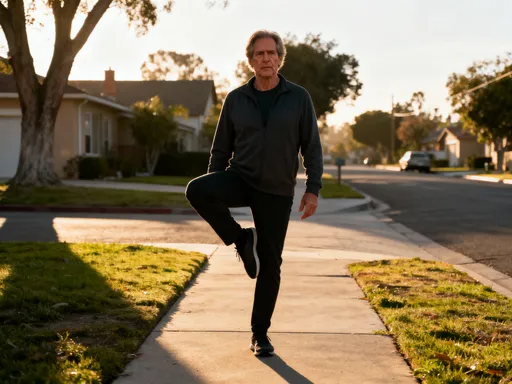
The first, single-leg stands, is deceptively simple. Stand on one leg, keeping the other foot just off the ground. Keep your posture tall, shoulders relaxed, and gaze forward. Hold for 20 to 30 seconds, then switch sides. This exercise strengthens the ankle, knee, and hip stabilizers while training the brain to maintain equilibrium with reduced base support. As you improve, progress by closing your eyes—this removes visual input and forces the body to rely more on proprioception and the vestibular system. You may sway more at first, but this is part of the learning process.
Tandem walking—walking in a straight line with one foot directly in front of the other, heel to toe—challenges both balance and coordination. This narrow base of support forces the body to make constant micro-adjustments, improving joint control and spatial awareness. It’s especially effective for training proprioception, as the feet must precisely sense and respond to surface changes. Perform this along a hallway or flat path, using a wall for light support if needed. Start with 10 steps and gradually increase. This movement mimics real-life situations like stepping onto a curb or navigating a crowded space.
Heel-to-toe rocks involve standing with feet together and shifting weight from heels to toes and back. This gentle rocking motion enhances ankle mobility and strengthens the muscles that control forward and backward stability. It also improves the body’s ability to sense center of mass, a critical skill for preventing falls. Perform 10 to 15 slow, controlled rocks, focusing on smooth transitions. This exercise is ideal for beginners and can be done safely at home, even near a counter for support.
Weight shifts—shifting body weight side to side while standing with feet shoulder-width apart—train lateral stability. This movement strengthens the hips and core, which are essential for preventing sideways falls. Shift smoothly from one foot to the other, keeping the upper body still and avoiding leaning. As with other exercises, progress by reducing hand support or standing on a softer surface like a folded towel. These small challenges increase difficulty without risk.
Performed daily, these exercises yield measurable improvements. Within weeks, many people report standing more steadily, walking with greater confidence, and feeling more aware of their body in space. The changes may seem subtle—a slight reduction in swaying, smoother turns, or quicker recovery when tripped—but they add up to real-world stability. The goal isn’t perfection; it’s progress, built one small shift at a time.
Building a Real-Life Balance Practice
While formal exercises are important, the real power of balance training comes from integrating it into daily life. Stability isn’t just something you practice for a few minutes a day—it’s a skill that grows through consistent, mindful use. The most effective balance routines blend structured drills with natural movement opportunities throughout the day. This approach turns everyday moments into training sessions without adding extra time to a busy schedule.
Simple habits can make a big difference. Try brushing your teeth while standing on one leg. This combines a routine activity with a balance challenge, making it easy to remember and perform daily. When waiting in line or cooking at the counter, shift your weight from foot to foot or stand on tiptoes. These micro-movements keep the balance systems active and responsive. Walking on varied surfaces—like grass, gravel, or sand—also provides natural challenges that strengthen foot muscles and improve adaptability. Even standing while working at a desk, if possible, encourages better posture and constant micro-adjustments that support stability.
Consistency matters more than intensity. Unlike high-intensity workouts that require recovery, balance training can be done daily with little fatigue. The brain and body respond best to frequent, low-dose practice. Think of it like learning a language—regular exposure builds fluency over time. A few minutes here and there, repeated consistently, are more effective than one long session per week. Over time, these small efforts rewire neural pathways, making balance more automatic and reliable.
Tracking progress can be motivating. Simple tests—like holding a single-leg stand for 30 seconds, walking heel-to-toe for 10 steps, or turning your head side to side while walking—can serve as benchmarks. Re-test every few weeks to see improvement. Don’t be discouraged if progress feels slow. Balance gains are often silent, emerging gradually through improved coordination and confidence rather than dramatic milestones. The key is patience and persistence. Rushing progression—like attempting advanced moves too soon—can lead to frustration or injury. Stability builds best when nurtured with care, not pushed too hard.
When to Seek Professional Help
Most balance issues can be improved with regular practice, but some symptoms warrant professional evaluation. Frequent dizziness, unexplained falls, vertigo (a spinning sensation), or sudden imbalance should not be ignored. These may indicate underlying conditions affecting the inner ear, nervous system, or cardiovascular health. While balance training is beneficial for many, it’s not a substitute for medical diagnosis when red flags are present.
Persistent dizziness, especially when accompanied by nausea, hearing changes, or headaches, could point to vestibular disorders such as benign paroxysmal positional vertigo (BPPV) or Meniere’s disease. Neurological conditions like Parkinson’s disease or multiple sclerosis can also affect balance early in their progression. Medications, vision problems, and inner ear infections are other possible contributors. A doctor or physical therapist can perform assessments to identify the cause and recommend appropriate treatment.
Physical therapists, especially those trained in vestibular rehabilitation, are experts in diagnosing and treating balance disorders. They can design personalized exercise programs, teach safe movement strategies, and guide recovery from falls or injuries. Seeking help is not a sign of weakness—it’s a smart, proactive step toward long-term health. Early intervention can prevent worsening symptoms and reduce fall risk significantly.
It’s important to distinguish between normal balance decline and concerning symptoms. Feeling a little unsteady when tired or standing up quickly is common and often improves with practice. But if imbalance interferes with daily life, causes fear of falling, or happens without clear cause, professional guidance is essential. Exercise helps most people, but ruling out medical issues ensures that efforts are both safe and effective.
Long-Term Gains: More Than Just Stability
Improving balance delivers benefits that extend far beyond preventing falls. It enhances posture, reducing strain on the spine and joints. With better alignment, everyday movements become more efficient, requiring less effort and causing less wear and tear. People often notice they stand taller, walk with a smoother gait, and feel less stiffness after sitting. These changes contribute to long-term joint health and reduce the risk of chronic pain.
Greater body awareness—developed through balance training—sharpens focus and coordination. Movements become more intentional and controlled. This heightened sense of self in space improves performance in daily tasks, from carrying groceries to playing with grandchildren. It also enhances safety, as the body reacts more quickly to slips or trips. The brain learns to anticipate and correct instability before it becomes a fall.
Perhaps the most profound change is in confidence. Many people report feeling more grounded, both physically and mentally. There’s a quiet empowerment in knowing your body can handle unexpected shifts—whether stepping off a bus, navigating a crowded sidewalk, or simply rising from a chair without hesitation. This confidence encourages greater activity, which in turn supports overall health. The cycle becomes self-reinforcing: better balance leads to more movement, which leads to better balance.
Balance is not a trend or a temporary fix. It’s a lifelong skill, quiet but essential. Like good posture or deep breathing, it operates in the background, supporting everything else. It’s not flashy, but it’s foundational. By relearning and reinforcing this natural ability, you’re not just preventing falls—you’re reclaiming ease, control, and presence in your body. The goal isn’t perfection. It’s showing up fully in every step, every movement, every day.
Balance isn’t flashy, but it’s foundational. Strengthening it reshapes how you move, think, and live. Unlike trends, this isn’t about quick fixes—it’s about lasting control. Start small, stay consistent, and let your body relearn what it once knew. The goal isn’t perfection, but presence in every step.