Why Anti-Aging Rehab Falls Flat — And How to Fix It
Anti-aging isn’t just about creams or supplements—true vitality starts with movement. I learned this the hard way, pushing through trendy workouts only to feel more worn out. Many of us unknowingly make rehab training mistakes that accelerate aging instead of slowing it. What if the key to staying young lies not in doing more, but in moving smarter? Let’s explore the real pitfalls holding people back.
The Hidden Cost of Ignoring Movement Quality
Most people believe that the more they move, the better their body will age. Yet, this assumption overlooks a crucial truth: not all movement is beneficial. When exercise lacks attention to form and control, it can do more harm than good. Poor movement patterns—such as rounded backs during lifts, collapsed arches in squats, or shrugging shoulders during rows—place undue stress on joints and connective tissues. Over time, these small errors accumulate, leading to joint degeneration, chronic inflammation, and reduced range of motion. These are not just signs of aging—they are often the result of how we’ve moved, or mis-moved, for years.
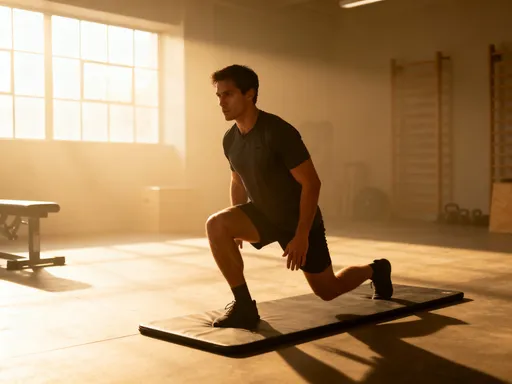
The body responds to repetition. Every time we perform a movement, our nervous system reinforces the pattern, whether correct or flawed. This means that repeatedly performing exercises with poor alignment teaches the body to function inefficiently. For example, someone who consistently shifts weight to one side during lunges may develop uneven hip wear, increasing the risk of osteoarthritis. Similarly, a person who habitually holds tension in the neck and shoulders during daily tasks may experience accelerated cervical spine degeneration. These changes are not inevitable consequences of time—they are preventable outcomes of unaddressed movement dysfunction.
High-intensity workouts often prioritize speed and volume over precision, making them especially risky for long-term joint health. In contrast, slow, controlled rehab training emphasizes neuromuscular coordination, joint centration, and muscle sequencing. These elements are foundational to maintaining mobility and preventing wear. Research in physical therapy consistently shows that low-load, high-repetition exercises with proper form lead to better joint lubrication, improved proprioception, and stronger stabilizing muscles. This kind of training may not look dramatic, but it builds resilience from within, protecting against the stiffness and pain commonly mistaken for natural aging.
Correcting movement quality begins with awareness. Simple cues—like “keep your ribs down,” “engage your glutes,” or “distribute weight evenly across your feet”—can transform a routine from harmful to healing. For instance, during a bodyweight squat, many people allow their knees to cave inward due to weak hip abductors and poor motor control. By consciously engaging the outer hips and maintaining a neutral pelvis, the joint load shifts from the knee to the stronger gluteal muscles. Over time, this small adjustment preserves cartilage, reduces strain, and enhances functional strength. The goal is not to eliminate movement, but to refine it—turning every repetition into an act of self-care rather than self-sabotage.
Overlooking the Mind-Muscle Connection
Rehab training often treats the body as a mechanical system—pull levers, lift weights, repeat. But this approach ignores a vital component: the brain. Physical decline is not just a muscular or skeletal issue; it is deeply neurological. As we age, the connection between the mind and muscles weakens, a phenomenon known as neuromuscular inhibition. This means that even if a muscle is physically capable of contracting, the brain may fail to activate it fully. The result? Compensatory patterns, instability, and increased risk of injury.
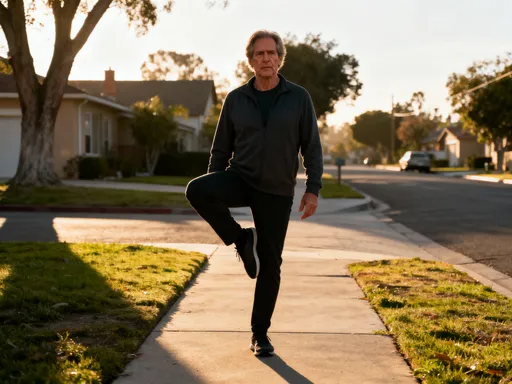
Consider the simple act of standing on one leg. For many, this becomes increasingly difficult with age—not necessarily because the leg muscles have weakened, but because the brain struggles to coordinate balance. The stabilizing muscles in the foot, ankle, and core fail to engage at the right time or with the right intensity. This is where mindfulness during movement becomes essential. By focusing attention on specific body parts—such as the pressure under the ball of the foot during a squat or the engagement of the lower abdomen during a step-up—individuals can retrain their nervous system to recruit muscles more effectively. This is not just mental focus; it is neuroplasticity in action.
Techniques like breath-synced repetitions and body scanning can deepen this mind-muscle connection. For example, inhaling during the eccentric (lowering) phase of a movement and exhaling during the concentric (lifting) phase helps regulate intra-abdominal pressure and enhances core stability. Similarly, body scanning—mentally checking in with each joint and muscle group before and during exercise—promotes greater body awareness and reduces the likelihood of compensation. These practices are not optional extras; they are fundamental to effective rehab training.
Studies in motor learning have shown that individuals who practice mindful movement experience greater improvements in strength and coordination than those who perform the same exercises without focus. This is especially important for middle-aged and older adults, whose nervous systems benefit significantly from deliberate, attention-based training. The takeaway is clear: movement without awareness is incomplete. To slow age-related decline, we must train the brain as much as the body, ensuring that every action is intentional, precise, and fully engaged.
Treating Symptoms Instead of Root Causes
It’s common to see someone with tight hips and immediately prescribe stretches or foam rolling. While these may offer temporary relief, they often fail to address the underlying cause. Why are the hips tight in the first place? Is it due to prolonged sitting, a past injury, or an imbalance in the core or pelvis? Without answering this question, rehab becomes a cycle of symptom management rather than lasting change. True anti-aging movement work requires a detective’s mindset—looking beyond the site of pain to uncover the source of dysfunction.
Compensatory patterns are the body’s way of adapting to weakness or restriction. For example, someone with weak gluteal muscles may rely on their hamstrings and lower back to perform hip extension. Over time, this leads to hamstring tightness and lumbar strain—symptoms that are often misdiagnosed as the primary problem. Similarly, shoulder stiffness may stem not from the shoulder joint itself, but from poor scapular control or restricted thoracic spine mobility. When rehab focuses only on the painful area, it misses the opportunity to correct the root imbalance, allowing the cycle of dysfunction to continue.
To break this cycle, individuals must assess their movement history. When did the pain start? What activities make it better or worse? Are there old injuries or surgeries that may have altered movement patterns? These questions help identify contributing factors. For instance, a woman in her 50s experiencing knee pain during walking may discover that her issue began after a minor ankle sprain years ago. That injury, though seemingly healed, may have led to a slight change in gait, shifting load to the opposite knee. Without addressing the altered biomechanics, strengthening the knee alone will not resolve the problem.
Corrective strategies involve retraining movement sequences and restoring optimal muscle function. This might include activating underused muscles through isolated exercises, improving joint mobility in restricted areas, or re-educating posture during daily activities. The goal is not to eliminate symptoms, but to create a body that moves efficiently and without strain. By focusing on root causes, rehab becomes a tool for long-term vitality, not just short-term relief.
The Myth of One-Size-Fits-All Programs
Social media is filled with viral rehab workouts promising youthful joints and pain-free movement. While these programs may work for some, they often fail to account for individual differences in anatomy, injury history, and biomechanics. What feels liberating for one person may be damaging for another. The human body is not uniform—joint structures vary, muscle lengths differ, and past injuries leave unique imprints. A program that ignores these variables risks reinforcing dysfunction rather than correcting it.
Take pelvic tilt, for example. Some individuals naturally have a more anterior (forward-tilted) pelvis, while others have a posterior (backward-tilted) orientation. A rehab routine that universally cues “tuck your tailbone” may help one person stabilize their lower back but could compress the spine of another. Similarly, shoulder mobility varies widely. A person with hypermobile joints may need stability exercises, while someone with stiffness may benefit from gentle mobilization. Applying the same routine to both without assessment can worsen imbalances.
Personalization begins with self-awareness. Simple self-assessment cues can guide safer choices. For instance, observing how the knees track during a squat—do they move inward, outward, or stay aligned? Noticing where tension arises during a stretch—does it feel in the target muscle or somewhere else? These observations provide valuable feedback. Additionally, understanding one’s injury history is crucial. A past ankle sprain, cesarean section, or shoulder dislocation may require specific modifications to prevent re-injury or compensation.
When in doubt, professional screening is invaluable. A physical therapist or certified movement specialist can perform functional assessments to identify asymmetries, restrictions, and weaknesses. This information allows for a tailored rehab plan that addresses individual needs. The message is not to avoid popular programs altogether, but to approach them with discernment. Adaptation, not blind adoption, is the key to sustainable progress. True anti-aging movement is not about following trends—it’s about listening to your body and responding with intelligence.
Neglecting Recovery as Part of the Process
Rehab is not complete when the workout ends. What happens afterward—how the body rests, repairs, and regenerates—is equally important. Yet, many people overlook recovery, believing that more effort equals faster results. In reality, chronic stress, poor sleep, and inadequate rest impair tissue healing and accelerate cellular aging. The body’s ability to rebuild collagen, repair muscle fibers, and reduce inflammation depends on periods of low physiological demand. Without these, even the best rehab program can fall short.
One of the most significant factors in recovery is sleep. During deep sleep, the body releases growth hormone, which supports tissue repair and muscle regeneration. It also clears metabolic waste from the brain and reduces systemic inflammation. Chronic sleep deprivation disrupts these processes, leading to slower recovery, increased pain sensitivity, and higher cortisol levels. Elevated cortisol, the primary stress hormone, has been linked to reduced collagen synthesis, muscle breakdown, and fat accumulation around the abdomen—all signs commonly associated with aging.
Beyond sleep, daily habits influence recovery. Hydration rhythms matter—drinking water consistently throughout the day supports joint lubrication and nutrient transport. Prolonged sitting increases fluid pooling in the lower limbs, reducing circulation and delaying healing. Even breathing patterns play a role. Shallow, chest-dominant breathing activates the sympathetic nervous system, keeping the body in a state of low-grade stress. In contrast, diaphragmatic breathing promotes parasympathetic activation, supporting relaxation and repair.
Intentional recovery practices enhance rehab outcomes. Timed cooldowns—such as five minutes of gentle movement and stretching after exercise—help clear metabolic byproducts and reduce muscle soreness. Daily movement variety, like walking barefoot on different surfaces or changing sitting positions, stimulates circulation and prevents stagnation. These habits may seem minor, but they create a physiological environment conducive to healing. Recovery is not passive—it is an active part of the rehab process, essential for long-term vitality.
Trusting Trends Over Science-Backed Principles
The internet is flooded with flashy rehab trends—bouncy rebounding, extreme stretching challenges, and rapid joint mobilization techniques. While these may appear fun or effective, many lack scientific support and can even be harmful. Rebounding, for instance, involves repetitive impact that may overload already fragile joints, especially in individuals with osteopenia or cartilage wear. Extreme stretching, particularly when performed dynamically or without proper warm-up, can lead to ligament laxity and hypermobility, increasing the risk of joint instability.
These trends often prioritize novelty over safety. They are designed for social media engagement, not long-term health. In contrast, science-backed rehab principles emphasize controlled, progressive loading and neuromuscular re-education. Eccentric training—slowly lowering a weight—has been shown to strengthen tendons and improve muscle elasticity, making it ideal for aging tissues. Rhythmic stabilization—small, controlled movements that challenge balance without strain—enhances joint proprioception and reduces fall risk. These methods may not go viral, but they are proven to support sustainable function.
Another issue with trends is the lack of progression guidance. A viral 10-minute mobility routine may feel good initially, but without a plan to gradually increase demand, it fails to build lasting resilience. Effective rehab follows a logical progression: from awareness to activation, from isolation to integration, from stability to strength. This requires patience and consistency, qualities that are often undervalued in a culture that demands quick fixes.
Building discernment is crucial. Before adopting a new trend, ask: Is this supported by research? Does it respect my individual limitations? Could it cause harm over time? Consulting evidence-based sources—such as peer-reviewed journals, physical therapy guidelines, or certified professionals—helps separate fact from fad. The goal is not to reject innovation, but to prioritize safety and sustainability. True anti-aging movement is not about chasing the latest craze—it’s about choosing practices that stand the test of time.
Building a Sustainable, Smarter Routine
Effective anti-aging rehab is not about doing more—it’s about moving with purpose. The most powerful routines are those that integrate seamlessly into daily life, emphasizing consistency, precision, and long-term adaptability. A sustainable framework follows three principles: assess, correct, and progress. First, assess your current movement patterns through self-observation or professional evaluation. Identify areas of restriction, weakness, or compensation. This creates a baseline for improvement.
Next, correct dysfunctional patterns with targeted exercises. This might include glute activation drills for someone with lower back pain, scapular stabilization for shoulder discomfort, or ankle mobility work for balance issues. These corrections should be performed with mindfulness, focusing on quality over quantity. Two sets of 10 slow, controlled repetitions are more effective than rushed, high-volume sets. The goal is to retrain the nervous system, not exhaust the body.
Finally, progress gradually. Once a movement pattern is stable, introduce slight challenges—more range of motion, longer duration, or light resistance. This builds resilience without overwhelming the system. A weekly structure might include three days of focused rehab work, two days of gentle mobility, and daily integration of mindful movement—such as standing with pelvic neutrality, using stairs with full foot engagement, or carrying groceries with proper posture.
Real-world integration is key. Instead of treating rehab as a separate event, embed it into everyday actions. Walk with awareness of heel-to-toe transition. Sit with a neutral spine. Breathe deeply during moments of stress. These small choices compound over time, creating a body that moves efficiently and ages gracefully. True anti-aging is not about reversing time—it’s about honoring the body’s design, moving with intelligence, and building a foundation for lifelong vitality. The journey is not about perfection, but about progress—one mindful step at a time.