Why I Started Yoga Meditation for Everyday Calm — A Simple TCM-Inspired Shift
I used to think meditation was just sitting still — until I tried blending yoga meditation with traditional Chinese medicine principles. It wasn’t about fixing anything, but about listening to my body. Over time, small changes brought real shifts: better sleep, less tension, clearer mornings. This isn’t a cure, but a way to stay aware. If you’ve ever felt drained without knowing why, this might resonate. Let me share how simplicity became my strongest health tool.
The Burnout That Changed Everything
There was a time when getting through the day felt like running on empty. Mornings began with a heavy sense of fatigue, even after eight hours of sleep. Brain fog lingered past midday, making it hard to focus on simple tasks. Energy dipped sharply by late afternoon, yet sleep remained restless and unsatisfying. At first, these symptoms were brushed off as part of a busy life—raising children, managing household routines, and keeping up with daily responsibilities. But the exhaustion wasn’t just physical; it carried an emotional weight. There were moments of unexplained irritability, a short temper over small things, and a quiet sense of detachment from things once enjoyed.
What finally shifted was the realization that the body often speaks in whispers before it shouts. Headaches, stiff shoulders, and disrupted sleep weren’t random inconveniences—they were signals. Modern life, with its constant demands and digital distractions, had trained a habit of ignoring these cues. The idea of wellness had been reduced to quick fixes: caffeine for energy, over-the-counter remedies for tension, and late-night scrolling as a form of escape. But none of these addressed the root of the fatigue. That awareness sparked a quiet curiosity: could there be a gentler, more sustainable way to restore balance?
This question led to an exploration beyond conventional solutions. It wasn’t about chasing a dramatic transformation but seeking a return to natural rhythm. Among the many approaches considered, yoga meditation and traditional Chinese medicine (TCM) stood out—not as replacements for medical care, but as complementary perspectives focused on harmony. The appeal lay in their emphasis on prevention, awareness, and the interconnectedness of mind and body. This wasn’t about achieving perfection, but about learning to listen again.
What Yoga Meditation Really Means (Beyond the Mat)
Many people picture yoga meditation as an image of stillness—someone seated cross-legged, eyes closed, completely free of thought. But in practice, it’s far more accessible and forgiving. Yoga meditation is not about emptying the mind or mastering difficult postures. It’s about cultivating presence through mindful movement and breath awareness. It’s the deliberate act of tuning in, not tuning out. This subtle shift in understanding made all the difference. It wasn’t performance; it was practice.
At its core, yoga meditation supports the nervous system by activating the parasympathetic response—the body’s natural mechanism for rest and recovery. When stress accumulates, the sympathetic nervous system stays engaged, keeping the body in a state of alertness. Slow, intentional breathing and gentle movement signal safety, allowing the body to shift from ‘fight or flight’ to ‘rest and digest.’ This transition doesn’t happen overnight, but with consistency, it becomes more accessible.
This process aligns closely with traditional Chinese medicine’s view of health. In TCM, well-being depends on the smooth flow of Qi (pronounced “chee”), often described as vital energy. Qi travels through pathways in the body known as meridians, much like rivers nourishing a landscape. When these pathways become blocked or imbalanced—due to stress, poor sleep, or emotional strain—the body may respond with physical or mental discomfort. Yoga meditation, when approached with awareness, can support this flow by promoting relaxation and reducing internal resistance.
Think of the body as a finely tuned instrument. Just as a musician listens for subtle shifts in pitch, yoga meditation teaches you to notice the quiet signals of tension, breath, and mood. It’s not about forcing stillness but about creating space for what is already there. Over time, this practice fosters a deeper relationship with oneself—one built on observation, not judgment.
How TCM Views Mind-Body Harmony
Traditional Chinese medicine operates on the principle that health is not the absence of illness, but the presence of balance. Rather than isolating symptoms, TCM considers the whole person—emotions, lifestyle, environment, and physical state. One of its foundational ideas is that emotional patterns can manifest in the body. For example, chronic worry may contribute to digestive discomfort, while prolonged frustration might show up as tightness in the shoulders or a feeling of heaviness in the chest.
This mind-body connection is not mystical—it’s practical. When stress persists, the body holds onto it, often in predictable ways. The neck, back, and jaw are common areas where tension accumulates. In TCM, these areas are linked to specific organ systems and energy pathways. The liver, for instance, is associated with the smooth flow of Qi and emotional regulation. When life feels overwhelming, this system may become congested, leading to irritability, headaches, or difficulty sleeping. While TCM does not claim to diagnose or treat medical conditions, its framework offers a way to understand how lifestyle and emotions influence physical well-being.
Practices like gentle stretching, breathwork, and mindful stillness are seen as ways to support the body’s natural rhythms. They don’t ‘fix’ anything in a clinical sense, but they create conditions for balance to return. A short session of deep breathing, for example, may not erase stress, but it can interrupt the cycle of tension and allow a moment of reset. Over time, these moments accumulate, helping to restore a sense of internal harmony.
What sets TCM apart is its emphasis on daily rituals over dramatic interventions. Wellness isn’t something you achieve once; it’s something you nurture every day. Lighting a candle, sipping warm tea, or taking a few slow breaths in the morning—these small acts are seen as meaningful. They signal care. They remind the body that it is not just a machine to be pushed, but a living system that thrives on attention and rhythm.
My Simple 10-Minute Morning Routine
One of the most transformative changes was creating a morning ritual that didn’t add pressure but offered support. The routine takes just ten minutes and begins before checking the phone or opening a browser. It’s not about doing more—it’s about starting differently. The three elements—deep breathing, gentle stretching, and quiet focus—were chosen for their simplicity and accessibility. No special equipment, no perfect posture, just presence.
The first two minutes are dedicated to diaphragmatic breathing. Sitting comfortably on the edge of the bed or in a chair, hands resting on the lower abdomen, the focus is on slow, deep breaths. Inhaling through the nose for a count of four, allowing the belly to rise, then exhaling slowly through the mouth for six. This extended exhale helps activate the parasympathetic nervous system, signaling the body to relax. It’s not about forcing the breath, but about following it—like watching waves roll in and out.
Next, two minutes of gentle movement: neck rolls, shoulder shrugs, and slow side stretches. These aren’t exercises for strength or flexibility, but invitations to release. The movements are small and deliberate, done with eyes closed if possible, to maintain internal focus. If there’s stiffness, it’s acknowledged without judgment. The goal isn’t to eliminate it, but to greet the body as it is that morning.
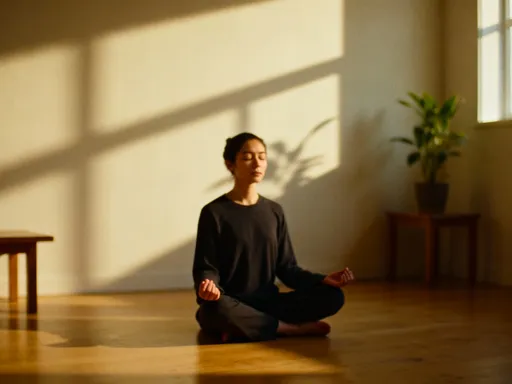
The final six minutes are spent in seated stillness. This doesn’t require a lotus position—just a stable, comfortable seat with the spine upright. The eyes may be closed or softly focused on a neutral point. Attention is brought to physical sensations: the weight of the hands, the contact of the feet with the floor, the rhythm of the breath. When the mind wanders—and it will—it’s gently guided back, not with frustration, but with kindness. This practice replaced the habit of reaching for the phone first thing, which often brought a rush of notifications and mental clutter. Instead, the day begins with a moment of calm, setting a different tone entirely.
Why Small Shifts Create Big Awareness
The most unexpected benefit of this routine wasn’t immediate relaxation—it was increased awareness. Over weeks and months, a subtle shift occurred: the ability to notice bodily signals earlier. A clenched jaw during a stressful conversation, shallow breathing while reading an email, or a tightness in the chest before speaking up—these sensations became more visible. That awareness didn’t eliminate stress, but it created space between stimulus and response.
This space is where choice lives. Instead of reacting automatically—snapping at a child, reaching for a snack, or pushing through fatigue—there was a pause. In that pause, a question could arise: What do I need right now? Rest? A glass of water? A moment of stillness? This wasn’t about perfection, but about presence. The practice wasn’t changing external circumstances, but changing the relationship to them.
Emotional awareness grew alongside physical sensitivity. Feelings that once felt overwhelming—frustration, sadness, anxiety—began to be recognized as temporary states, not permanent identities. There was less resistance, less need to fix or suppress. This didn’t happen overnight, but through repetition. Each morning session was a small act of self-respect, a quiet reminder that attention matters.
Psychologically, this fostered a sense of grounding. The world still moved quickly, but internally, there was more stability. Decisions felt less reactive, relationships less strained. It wasn’t that life became easier, but that the inner response became more resilient. This, perhaps, is the true power of mindfulness: not to escape difficulty, but to meet it with greater clarity and compassion.
Common Missteps and How I Adjusted
The journey wasn’t without setbacks. In the beginning, there was frustration—frustration at a wandering mind, frustration at missing days, frustration at not feeling ‘calmer’ right away. There was a quiet expectation that consistency should yield immediate results. When it didn’t, discouragement set in. Skipping a day turned into skipping a week. The routine felt like another item on a to-do list, another thing to fail at.
What helped was shifting the mindset from performance to practice. Yoga meditation isn’t about doing it ‘right’—it’s about showing up. Some days, the breath is steady and the mind is quiet. Other days, thoughts race, the body feels stiff, and focus is scattered. Both are valid. The practice isn’t diminished by imperfection; it’s deepened by honesty.
Adjustments were necessary. Mornings didn’t always work—sometimes the house was too loud, or time felt too short. Experimenting with evening sessions brought different benefits: a chance to release the day’s tension before sleep. The environment also mattered. Finding a quiet corner, lighting a candle, or opening a window for fresh air made the space feel intentional. Natural light, in particular, helped signal the body that this was a moment apart from routine tasks.
Patience became the most important tool. Progress wasn’t measured in hours of stillness, but in small moments of awareness. Noticing a deep breath during a stressful moment. Choosing to pause before reacting. These were the real milestones. Letting go of the need for visible results allowed the practice to take root naturally, without pressure.
Building a Lifestyle, Not a Habit
Over time, the ten-minute routine began to influence other parts of daily life. It wasn’t that new habits were added, but that old patterns shifted. Meals were eaten more slowly, with greater attention to taste and fullness. Walks became opportunities to notice the rhythm of footsteps and the feel of the air. Caffeine intake decreased, not through strict rules, but because the body began to signal when it was truly needed.
This wasn’t discipline in the rigid sense—it was self-respect. The practice of listening inward created a natural filter: Does this serve me? Is this nourishing? These questions weren’t asked with judgment, but with curiosity. The result was a lifestyle that felt more aligned, not because it followed a strict plan, but because it responded to real needs.
Blending yoga meditation with TCM-inspired awareness fostered a sense of long-term resilience. It wasn’t about preventing every ache or eliminating stress, but about building a foundation that could adapt. When challenges arose—family demands, work pressures, seasonal fatigue—there was a deeper well of calm to draw from. This wasn’t immunity from difficulty, but the ability to navigate it with greater ease.
It’s important to emphasize that this approach does not replace professional medical care. If you are experiencing persistent physical or mental health concerns, consulting a qualified healthcare provider is essential. Yoga meditation and TCM principles are not treatments, but tools for daily support. They are ways to honor the body’s wisdom and create space for healing to occur naturally.
The journey from exhaustion to awareness wasn’t linear, but it was meaningful. It began with a simple question: What if I listened? From that moment, small actions—deep breaths, gentle stretches, quiet moments—became acts of reconnection. True wellness didn’t arrive as a destination, but as a daily practice of tuning in. In a world full of noise, the most powerful choice may be simplicity. It’s not about doing more, but about being present. And in that presence, there is space—for clarity, for calm, for the quiet strength that comes from knowing yourself.