How I Tamed My Anxiety with Just 5 Minutes of Meditation
Stress used to rule my life—racing thoughts, sleepless nights, constant worry. Then I tried something simple: daily meditation. No fancy apps, no hour-long sessions. Just five minutes a day. Over time, I noticed real changes—calmer reactions, better focus, and more control over my health. This isn’t a cure, but it’s a powerful tool. If you're managing a chronic condition or just feeling overwhelmed, this beginner-friendly practice might be worth a try.
The Breaking Point: When Stress Became Unbearable
There was a morning when the weight of everything finally pressed down so hard that I couldn’t get out of bed. My chest felt tight, my breath shallow, and my mind raced with worst-case scenarios about work, family, and my health. I had been living with type 2 diabetes for several years, and while I managed my blood sugar with medication and diet, I hadn’t realized how much stress was silently worsening my condition. That day, my doctor confirmed what I already sensed: my elevated blood pressure and inconsistent glucose levels weren’t just about food or pills—they were tied to chronic anxiety.
It wasn’t the first time I’d felt overwhelmed, but it was the first time I admitted I couldn’t manage it alone. I had tried everything—long walks, journaling, even cutting back on caffeine—but nothing quieted the constant hum of worry. The more I tried to push through, the more fatigued I became. My sleep suffered, my mood dipped, and I found myself snapping at my children over small things. I loved my family deeply, yet I felt disconnected, like I was watching my life through a fogged-up window.
What scared me most was how my mental state was affecting my physical health. Research shows that chronic stress increases cortisol, a hormone that can raise blood glucose and contribute to insulin resistance. For someone managing diabetes, this creates a dangerous loop: stress worsens symptoms, and worsening symptoms create more stress. I realized I needed a new approach—one that didn’t just treat the body, but also supported the mind. That’s when I first considered meditation, not as a spiritual ritual, but as a practical tool for survival.
Discovering Meditation: A Skeptic’s First Steps
The idea of meditation felt foreign, even a little silly, at first. I associated it with people sitting cross-legged on mountaintops, chanting in languages I couldn’t understand. I told myself, “I don’t have time for that,” and “I can’t just sit and do nothing.” Like many beginners, I believed meditation required emptying the mind completely—an impossible task for someone whose thoughts rarely paused. I assumed it was only for the deeply spiritual or the exceptionally calm, neither of which described me.
But after reading a small study published in the Journal of the American Medical Association that linked brief mindfulness practices to reduced anxiety, I decided to try it—just once. I sat on the edge of my bed, set a timer for five minutes, and closed my eyes. Immediately, I felt awkward. My back ached, my legs itched, and my mind jumped from grocery lists to a work email I hadn’t sent. When the timer rang, I opened my eyes, frustrated. “That was pointless,” I thought. “I didn’t feel any different.”
Yet something subtle had shifted. For a few seconds during that session, I had noticed my breath—really noticed it—without judging it or trying to change it. That tiny moment of awareness felt unfamiliar, almost radical. I hadn’t calmed down completely, but I had touched a different way of being, even if only briefly. It wasn’t enlightenment, but it was a beginning. I decided to try again the next day, not because I expected miracles, but because I was out of other options.
What Meditation Actually Is (And Isn’t)
One of the biggest barriers to starting meditation is misunderstanding what it’s supposed to be. Many people, like I once did, believe meditation means stopping all thoughts or achieving a state of perfect peace. This expectation sets beginners up for disappointment. The truth is, meditation isn’t about eliminating thoughts—it’s about changing your relationship with them. It’s not about becoming blank, but about becoming aware.
Think of it like strengthening a mental muscle. Just as lifting weights doesn’t make your arms instantly strong, sitting quietly for a few minutes won’t erase anxiety overnight. But over time, regular practice builds emotional resilience. You begin to notice when your mind spirals into worry, and instead of getting swept away, you learn to pause. That pause—the space between stimulus and reaction—is where meditation works its quiet magic.
Scientific studies support this. Research from Harvard Medical School has shown that mindfulness meditation can reduce activity in the amygdala, the brain’s fear center, while increasing connectivity in the prefrontal cortex, which governs decision-making and emotional regulation. Another study found that just eight weeks of daily meditation can lower cortisol levels, the hormone associated with stress. These changes don’t happen because meditation is mystical—they happen because it trains the brain to respond differently to challenges.
Meditation is also not tied to any religion or belief system. While it has roots in ancient traditions, modern mindfulness practices are secular and accessible to anyone, regardless of background. You don’t need to believe in anything specific to benefit from paying attention to your breath or body. It’s a skill, like learning to cook or drive, that improves with practice. And like any skill, it starts small.
The 5-Minute Rule: Starting Small to Stay Consistent
One reason people give up on meditation is because they start too big. They aim for 20 or 30 minutes a day, only to miss a session and feel like a failure. The key to success isn’t duration—it’s consistency. That’s why the five-minute rule works so well. Five minutes is short enough to fit into any schedule, even the busiest mornings or exhausted evenings. It’s long enough to create a shift, but short enough to feel manageable.
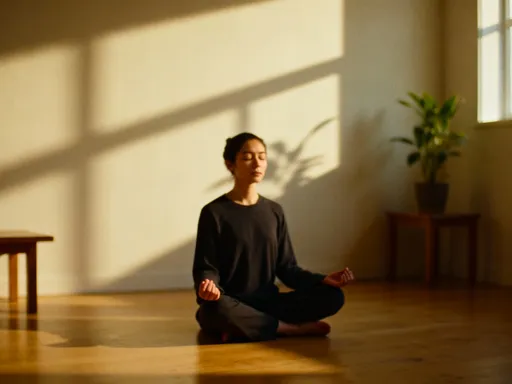
Here’s how to begin: choose a time that naturally fits into your routine. For me, it was right after brushing my teeth in the morning. I didn’t need to carve out new time—I simply added meditation to an existing habit. I sat in a quiet corner of the living room, set a timer on my phone, and focused on my breath. I didn’t worry about posture or perfection. Sometimes I slumped; sometimes I opened my eyes halfway through. The goal wasn’t to do it right—it was to show up.
During those five minutes, I practiced breath awareness. I noticed the cool air entering my nostrils, the rise and fall of my chest, the slight pause between inhale and exhale. When my mind wandered—and it always did—I gently brought it back, without scolding myself. This act of returning, again and again, is the core of meditation. It’s not about staying focused, but about noticing when you’ve drifted and choosing to come back.
If sitting still felt too difficult at first, I tried a body scan. I started at my toes and slowly moved my attention up through my feet, legs, hips, and so on, noticing any tension or sensation without trying to change it. This grounded me in the present moment and helped me reconnect with my body, which I often ignored when stressed. The beauty of the five-minute rule is that it removes pressure. Missing a day isn’t failure—it’s part of the process. What matters is returning the next day, without guilt.
How It Began to Change My Health Management
After about three weeks of consistent practice, I began to notice subtle shifts in how I managed my diabetes. My blood sugar readings were more stable, with fewer unexpected spikes. I wasn’t doing anything differently with my diet or medication, but I was responding to stress more calmly. When I received a frustrating email or faced a scheduling conflict, I didn’t immediately feel my heart race. Instead, I paused. Sometimes I even stepped away to take a few deep breaths before responding.
Better emotional regulation led to better self-care. I was more likely to take my medication on time, go for a walk after dinner, or prepare a healthy meal instead of reaching for convenience food. Sleep improved, too. Before meditation, I often lay awake for hours, replaying the day’s events. Now, I fell asleep faster and stayed asleep longer. Quality sleep supports insulin sensitivity, so this change likely contributed to better glucose control.
I also visited my doctor less frequently for stress-related complaints. While meditation didn’t cure my diabetes, it became a valuable part of my management plan. My healthcare provider noticed the improvement and encouraged me to keep going. We both agreed that while medication treats the body, meditation supports the mind—and the two work best together. It’s not a replacement for medical care, but a complement to it.
Over time, I realized that managing a chronic condition isn’t just about numbers on a screen. It’s about how you feel, how you cope, and how you show up for yourself each day. Meditation didn’t eliminate my challenges, but it gave me a greater sense of agency. I wasn’t just reacting to my health—I was learning to respond with intention.
Tools That Helped (And Those That Didn’t)
When I first started, I wasn’t sure how to meditate on my own. I needed guidance, at least at the beginning. I explored several free resources, and some were more helpful than others. One of the most useful was Insight Timer, a meditation app with thousands of free guided sessions. I started with five-minute mindfulness practices led by calm, reassuring voices. These helped me stay focused and provided structure without pressure.
YouTube was another valuable resource. I found short, beginner-friendly videos from reputable sources like The Mindful Movement and Calm. I avoided overly spiritual or complex teachings and stuck to simple breath-focused practices. The key was finding voices and styles that felt approachable, not intimidating. I also appreciated that these tools were free—accessibility mattered, especially when I wasn’t sure if I’d stick with it.
Some tools, however, felt overwhelming. I tried a 30-day meditation challenge that promised transformation, but the daily time commitment felt like a chore. I also experimented with a wearable device that claimed to measure my “meditation score” based on heart rate variability. Instead of helping me relax, it made me anxious about performing well. I realized that the best tools were the simplest: a timer, a quiet space, and a willingness to try.
Eventually, I moved from guided sessions to unguided practice. I still use apps occasionally, especially on difficult days, but I no longer depend on them. The goal wasn’t to become an expert, but to build a sustainable habit. And for that, less is often more.
Building a Sustainable Habit: Beyond the First Month
The first month was the hardest. There were days I forgot, days I made excuses, and days I sat down only to stand up seconds later. But I kept returning. I learned that consistency doesn’t mean perfection—it means showing up, even when it feels awkward or inconvenient. To make it stick, I used habit stacking, a technique where you link a new behavior to an existing one. Since I always brush my teeth in the morning, I decided to meditate right after. The toothbrush became my cue.
I also stopped tracking progress in rigid ways. I didn’t keep a journal or set performance goals. Instead, I paid attention to how I felt over time. Did I react more calmly to stress? Was I sleeping better? These subtle signs mattered more than any checklist. When life got busy—during school holidays or family visits—I adjusted. Sometimes I meditated for two minutes instead of five. Sometimes I did it at night instead of morning. Flexibility prevented burnout.
Now, months later, meditation feels less like a practice and more like a part of my daily rhythm. It’s no longer something I “do”—it’s something I live with. I don’t expect it to solve every problem, but I trust it to help me face them with more clarity. Setbacks still happen, but they no longer derail me. I’ve learned that growth isn’t linear, and that’s okay.
Conclusion: A Practice, Not a Fix
Meditation hasn’t transformed my life overnight, and it won’t for you either. It’s not a miracle cure or a quick fix. But it is a powerful act of self-care—one that takes just five minutes a day. For anyone managing a chronic condition or simply feeling worn down by the demands of modern life, it offers a way to reclaim a sense of calm and control.
The changes may be subtle at first: a slightly slower breath, a moment of pause before reacting, a deeper night’s sleep. But over time, these small shifts add up. They create space between you and your stress, between your thoughts and your actions. That space is where healing begins—not because meditation erases pain, but because it helps you meet it with greater awareness and kindness.
If you’re considering starting, begin small. Sit quietly for five minutes. Focus on your breath. When your mind wanders, gently bring it back. Do it again tomorrow. There’s no need for special equipment, expensive apps, or hours of commitment. Just show up, as you are. And if you miss a day, begin again the next.
Always consult your healthcare provider before making changes to your health routine, especially if you have a medical condition. Meditation is not a substitute for professional treatment, but it can be a valuable support. Taking five minutes a day to breathe won’t change everything—but it can change something. And sometimes, that’s enough.